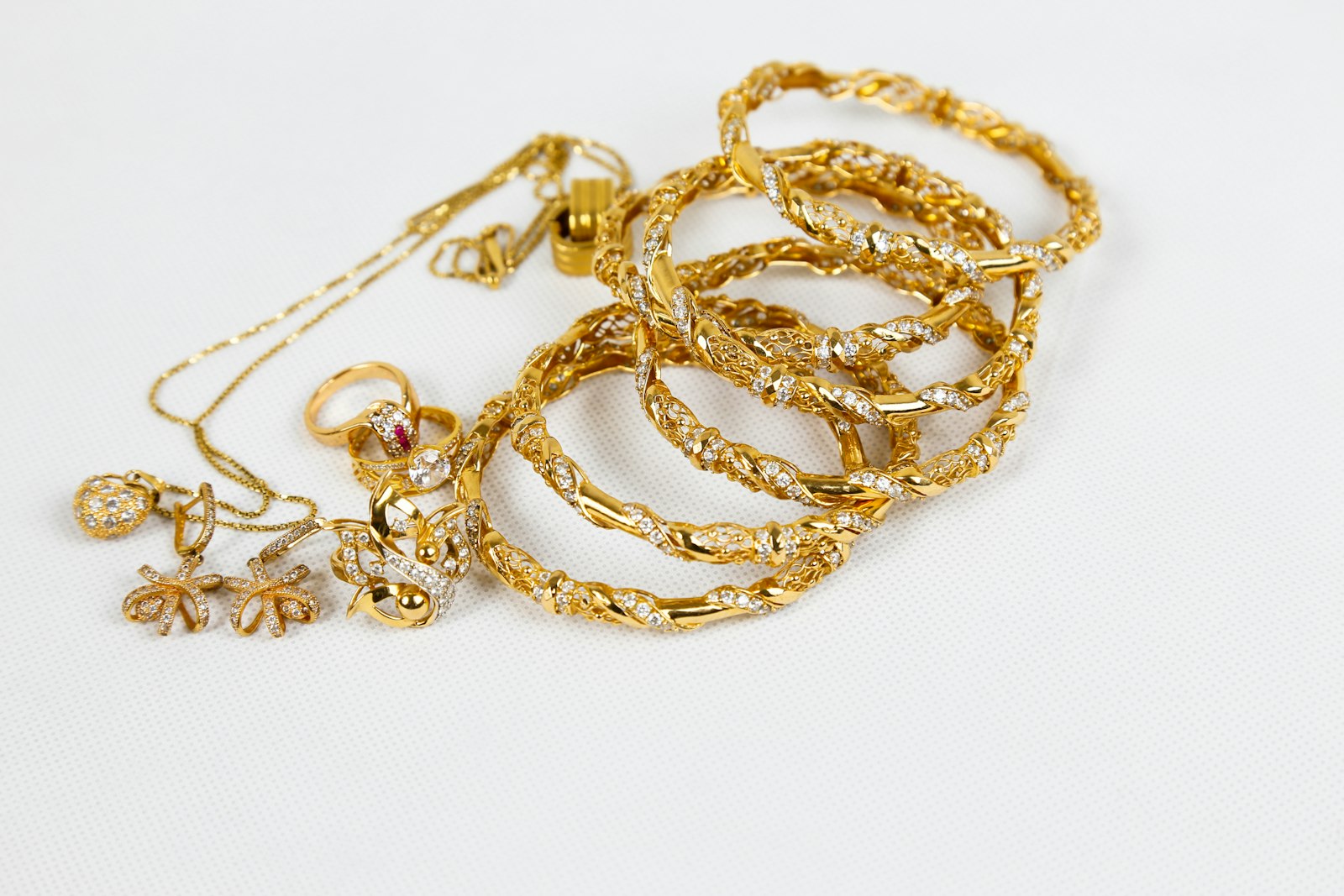
Karat tells you how much pure gold a piece contains. The markings around it tell you even more.
What to remember
- According to the FTC, the karat mark tells you how much pure gold a piece contains; 24K is pure gold.
- 14K means 14 parts out of 24 are gold, about 58%; 18K is 75% gold.
- Gold filled, gold plated and vermeil describe a gold layer over another metal, not solid gold.
- The FTC advises looking for a company trademark next to the karat mark.
Karat is the first thing to check when you buy gold jewelry. It tells you how much of the metal is actually gold, which affects color, durability and price.
What the numbers mean
The Federal Trade Commission (FTC) explains that the karat mark tells you how much pure gold a piece contains. Pure gold is 24 karats, but because it’s soft, jewelers usually mix it with other metals to make it more durable.
| Mark | Gold content | Notes |
|---|---|---|
| 24K | Pure gold | Very soft; rich yellow color |
| 18K | 18 of 24 parts, 75% | Rich color, softer than 14K |
| 14K | 14 of 24 parts, about 58% | Popular balance of color and durability |
| 10K | 10 of 24 parts, about 42% | Most durable; paler color |
In the US, 10 karat is generally the lowest karat sold as gold.
Solid, filled, plated or vermeil?
The FTC describes several terms you’ll see on labels:
- Solid gold: the piece isn’t hollow, and should carry a mark such as 14K or 18K.
- Gold filled, gold overlay or rolled gold plate: a layer of at least 10-karat gold mechanically applied to a base metal. If the gold is less than 1/20 of the metal’s weight, the mark should show a fraction, such as “1/40 14K gold overlay.”
- Gold electroplate: gold of at least 10 karats applied electrolytically to a base metal, at least 0.175 microns thick.
- Vermeil: a gold-plated item with a sterling silver base.
- Gold flashed or gold washed: a very thin layer of electroplated gold that wears off faster.
Buying tip: Look for a trademark next to the karat mark. The FTC’s advice is that if you don’t see a trademark along with the karat mark, you shouldn’t buy the piece.
Choosing the right karat
For rings and bracelets that see daily wear, 14K is a common choice because it holds up well. For earrings and pendants, which take less wear, 18K’s deeper color may appeal. Gold-filled and plated pieces can be good value for fashion jewelry, but plating may wear through over time.
Before you buy: If gold jewelry irritates your skin, the other metals in the alloy may be the cause. The American Academy of Dermatology lists 18-karat or higher yellow gold among options for people with a nickel allergy.
Ask before you buy
Get the karat, the metal and any plating described on your receipt, and check the return policy in writing. Our guide to buying jewelry as a gift has a checklist, and our necklace length guide helps with fit.
Common jewelry questions
Which karat is best for everyday rings?
Many people choose 14K for everyday wear because it balances gold content with durability. Higher karats are softer and scratch more easily.
Is white gold pure gold?
No. White gold is gold alloyed with white metals, and it’s often coated with rhodium for extra whiteness. That coating can wear over time and may need replating.
What does ‘gold flashed’ mean?
According to the FTC, it’s a very thin layer of electroplated gold that wears off faster than other types of plating.